Creating an SSH key on Windows. The simplest way to create SSH key on Windows is to use PuTTYgen. Download and run PuTTYgen. Click the 'Generate' button. For additional security, you can enter a key passphrase. This will be required to use the SSH key, and will prevent someone with access to your key file from using the key. Mar 11, 2019 To generate a new key that's compatible with Automate Schedule: Open PuTTYgen (PuTTY Key Generator). Select SSH-2 RSA in the Parameters section at the bottom of the page. Set the Number of bits in a generated key to '2048'. Click Generate. Move your mouse over the blank area in PuTTYgen to generate randomness for the key generation. Sep 26, 2019 This section shows you how to manually generate and upload an SSH key when working with PuTTY in the Windows environment. About PuTTY PuTTY is an SSH client for Windows that you will use to generate your SSH keys.
How to generate an SSH key in Windows 10
To generate an SSH key in Windows 10:
- Ensure the Windows 10 OpenSSH client is installed.
- Run “ssh-keygen” in Command Prompt and follow the instructions to generate your key.
Applies to Windows 10 1803, and up
Generating SSH keys in a Windows environment used to be a convoluted process which required the installation of third-party tools. Since the Windows 10 April 2018 update, Windows has shipped with a preinstalled OpenSSH client, which means you can use ssh-keygen to generate SSH keys. Read on as we walk you through the entire process.
First, you’ll need to make sure OpenSSH is installed on your machine – if you upgraded from an earlier version of Windows 10, you may need to manually enable it. Launch the Settings app and click the “Apps” category. Next, click the “Manage optional features” link. If you don’t see “OpenSSH Client” in the list which appears, click the “Add a feature” button and install it. You might need to reboot your PC after the installation.
Once OpenSSH is installed, you’re ready to proceed. Open Command Prompt from the Start menu. Type “ssh-keygen” (without the quotes) into the terminal window and press enter. You’ll be prompted to confirm the save location. We recommend pressing enter to use the default location in your user directory. Otherwise, type a path to save the key in and then press enter.
You can now choose to add a passphrase (password) to the key. If you add one, you’ll need to supply it whenever you use the key. Either type a passphrase and press enter or press enter immediately to proceed without one.
Windows will now generate your RSA public/private key pair. The public key will be stored as “id_rsa.pub” in the directory you specified. Upload this key to any machines you need to SSH into. You can then open a connection using Windows’ built-in SSH client – type “ssh [email protected]” to connect and authenticate using your generated credentials.
Share This Post:
Several tools exist to generate SSH public/private key pairs. The following sections show how to generate an SSH key pair on UNIX, UNIX-like and Windows platforms.
Generating an SSH Key Pair on UNIX and UNIX-Like Platforms Using the ssh-keygen Utility
UNIX and UNIX-like platforms (including Solaris and Linux) include the ssh-keygen utility to generate SSH key pairs.
- Navigate to your home directory:
- Run the ssh-keygen utility, providing as
filenameyour choice of file name for the private key:The ssh-keygen utility prompts you for a passphrase for the private key.
- Enter a passphrase for the private key, or press Enter to create a private key without a passphrase:
Note:
While a passphrase is not required, you should specify one as a security measure to protect the private key from unauthorized use. When you specify a passphrase, a user must enter the passphrase every time the private key is used.
The ssh-keygen utility prompts you to enter the passphrase again.
- Enter the passphrase again, or press Enter again to continue creating a private key without a passphrase:
- The ssh-keygen utility displays a message indicating that the private key has been saved as
filenameand the public key has been saved asfilename.pub. It also displays information about the key fingerprint and randomart image.
Generating an SSH Key Pair on Windows Using the PuTTYgen Program
Generate Ssh Key File In Windows
The PuTTYgen program is part of PuTTY, an open source networking client for the Windows platform. Monster hunter generations ultimate quests.
Fifa 18 download. FIFA 18 Serial Key Generator (PC, PS3,4, XBOX 360/ONE) On this wonderful day, our team wants to offer you a very special tool, the FIFA 18 Serial Key Generator.FIFA 18That’s a brand new free tool for the famous game, that came out this year! Our keygen can generate an unique key for PC, origin, steam or uplay platform and also for consoles: PS3, PS4, XBOX 360 and XBOX ONE, so you can play. Mar 12, 2020 FIFA 18 CPY Crack PC + CD Key Generator Free Download. In regards to FIFA 18 CPY Key Generator Free Download, but that is. Is that I can compete although not putting in a penny, with the men and women who spend tens of thousands of pounds on packs. Having access enables players to generate income in FUT. Jan 24, 2018 FIFA 18 CD Key Generator 2018 24 January 2018. Download latest FIFA 18 product cd key generator and generate your own free activation cd key. Redeem your generated product code and play this game online today!! Our team share to you the fresh and updated keygen. We decide to create this key generator to enable fellow gamers to grab a. FIFA 18 beta key generator! Fight for the Future -FIFA 18 is a team-based shooter where heroes do battle in a world of conflict.! FIFA 18 CD Key Generator to download your Game. In the mean time let’s get you into this post to download FIFA 18 successfully in Xbox one or PlayStation 4 or PC. Or Switch.We know about our customers due to years experience in this field. PES 2018 is the competitor of FIFA 18 and as alway FIFA wins when it comes to soccer.
Ssh Key Github
- Download and install PuTTY or PuTTYgen.
To download PuTTY or PuTTYgen, go to http://www.putty.org/ and click the You can download PuTTY here link.
- Run the PuTTYgen program.
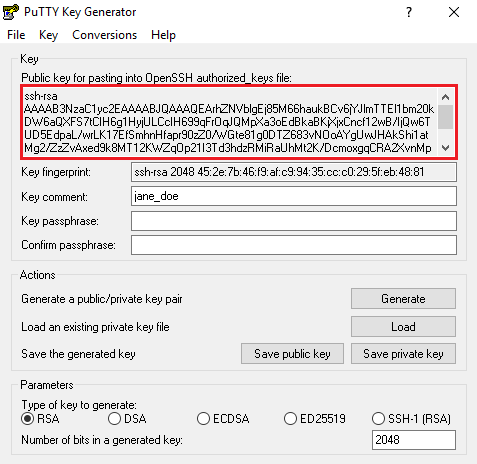
- Set the Type of key to generate option to SSH-2 RSA.
- In the Number of bits in a generated key box, enter 2048.
- Click Generate to generate a public/private key pair.
As the key is being generated, move the mouse around the blank area as directed.
- (Optional) Enter a passphrase for the private key in the Key passphrase box and reenter it in the Confirm passphrase box.
Note:
While a passphrase is not required, you should specify one as a security measure to protect the private key from unauthorized use. When you specify a passphrase, a user must enter the passphrase every time the private key is used.
- Click Save private key to save the private key to a file. To adhere to file-naming conventions, you should give the private key file an extension of
.ppk(PuTTY private key).Note:
The.ppkfile extension indicates that the private key is in PuTTY's proprietary format. You must use a key of this format when using PuTTY as your SSH client. It cannot be used with other SSH client tools. Refer to the PuTTY documentation to convert a private key in this format to a different format. - Select all of the characters in the Public key for pasting into OpenSSH authorized_keys file box.
Make sure you select all the characters, not just the ones you can see in the narrow window. If a scroll bar is next to the characters, you aren't seeing all the characters.
- Right-click somewhere in the selected text and select Copy from the menu.
- Open a text editor and paste the characters, just as you copied them. Start at the first character in the text editor, and do not insert any line breaks.
- Save the text file in the same folder where you saved the private key, using the
.pubextension to indicate that the file contains a public key. - If you or others are going to use an SSH client that requires the OpenSSH format for private keys (such as the
sshutility on Linux), export the private key:- On the Conversions menu, choose Export OpenSSH key.
- Save the private key in OpenSSH format in the same folder where you saved the private key in
.ppkformat, using an extension such as.opensshto indicate the file's content.